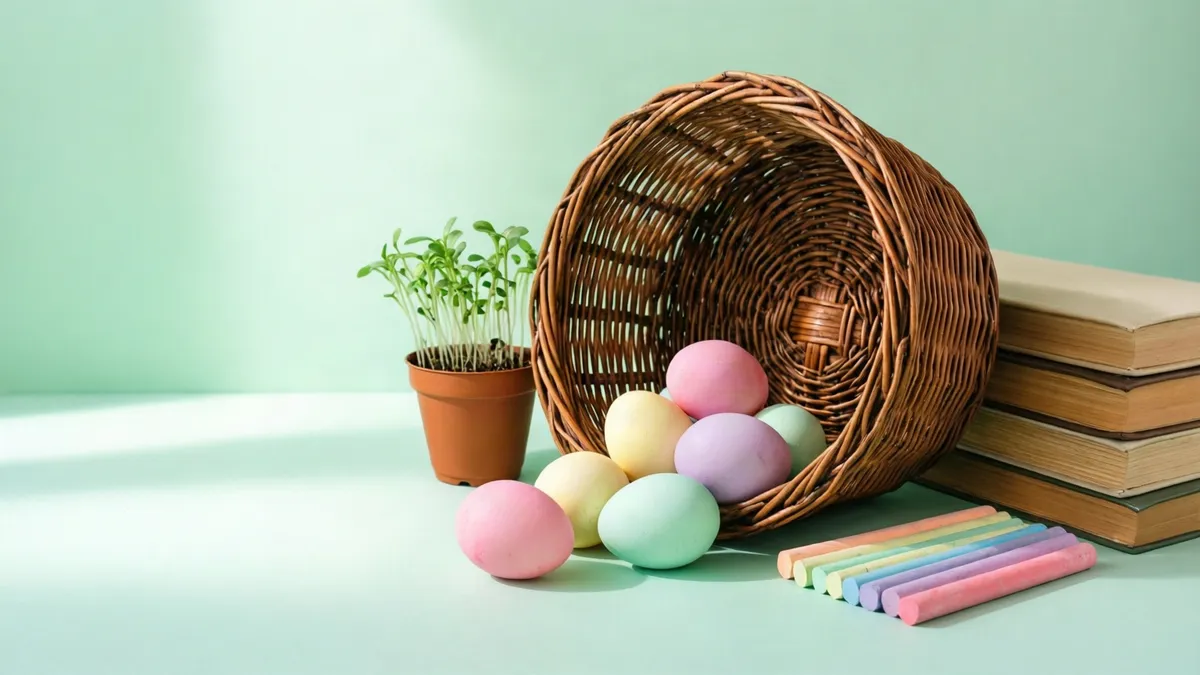
The short answer: The best Easter basket for any age is built around one anchor item the recipient will still use in May. This could be a LEGO set, a kite, or a good book, and everything else is filler. This guide names that anchor for each age band, from baby to adult, and shows how to budget around it so the money goes where it matters.
We write buying guides, not product reviews. We have not used every item on this page, and specs come from the manufacturer or listing. Whatever Amazon shows when you click is the authoritative figure.
This article contains affiliate links. If you buy through one, we earn a small commission at no extra cost to you. We only recommend what we would suggest to a friend.
The Federal Trade Commission's endorsement guides, 16 CFR Part 255, require a disclosure like that one to be difficult to miss, so it sits above every link here. Our full affiliate disclosure has the rest.
Easter is a religious holiday for many of the families reading this and a spring tradition for others; the basket belongs to both. The National Retail Federation's 2026 Easter survey reported that 80% of consumers plan to celebrate, and 58% cite tradition as their primary inspiration for Easter purchases. That tradition pulls people into the store in March, and the basket is what they walk out with.
If you are building one this year, the broader guide at Easter Basket Ideas, Sorted by Who It's For walks through the full recipient list. This page narrows to one question: what is the single best thing to put in the basket, by age, and how do you spend around it?
Easter basket ideas that last: the anchor item rule
A basket is five layers: vessel, filler, one anchor item, a candy layer, and one or two keepers. The layers don't change between a baby and a teenager. What sits in them changes completely. This is why one list for "kids" is one list too few — and why we break the layers down further in What to Put in an Easter Basket: The Five Layers.
The anchor item is the one thing the recipient will still use when the jelly beans are gone. It is the gift the basket is built around, not the gift tucked between the grass. Everything else exists to support it.
Six cheap things lose to one good one. A pile of small trinkets from the dollar aisle gets played with for an afternoon and then lives in a drawer until July. One sturdy kite, one LEGO set, one good book — those last past April. The math is simple: spend the same total, concentrate it.
Here is the order to build one:
- Pick the anchor item first, before you buy the basket or the grass.
- Choose a vessel that fits the anchor — a tote, a bucket, a reusable basket.
- Add minimal filler; paper grass or a folded scarf beats plastic.
- Layer in candy or a non-candy alternative sized to the age band.
- Finish with one or two small keepers — socks, stickers, a card.
That is the whole structure. The sections below name the anchor for each age.
Baby baskets: the anchor is sensory
Babies don't unwrap. They grab, mouth, and drop. The anchor for this age is a single sensory object — a crinkle toy, a soft book, a teether — that engages touch and sound. A pile of rattles is just noise.
Before anything goes in a basket for a child under three, read the box. The U.S. Consumer Product Safety Commission states that children's products for under-3s are banned hazardous substances when small parts present a choking, aspiration or ingestion hazard, codified at 16 C.F.R. part 1501. A small part is any object that fits entirely into a small parts cylinder, which approximates the fully expanded throat of a child under three. The rule is mechanical: if it fits the tube, it doesn't go in the basket.
Board books are excluded from the small parts ban, along with rattles and pacifiers, so they are a natural anchor here. A soft cloth book or a crinkle toy works the same way: one object, one sense, one thing that lasts past the holiday.
Filler is minimal at this age. A bib, a pair of socks, one small plush. The basket itself can be a soft storage bin the parents will reuse.
Toddler baskets: the anchor is durable
Toddlers throw, stomp, and test every object against the floor. The anchor must survive that. A sturdy truck, a chunky crayon set, a good ball — these earn their spot.
The same small-parts rule applies. The CPSC requires that certain children's products containing small parts, balloons, small balls, or marbles carry a warning label per 16 C.F.R. § 1500.19. That label is what you look for on the box — or its absence tells you the item passed the tube test.
Chunky crayons are excluded from the ban as writing materials. A chunky crayon set plus a roll of paper is a basket that becomes an activity, not just a pile of stuff. Stacking cups and a small ball round it out.
Skip the candy layer for this age. A toddler does not need jelly beans, and the Non-Candy Easter Basket Ideas That Actually Land guide has alternatives that work better.
Preschool baskets: the anchor is creative
Three to five is where imagination opens up. The anchor becomes an open-ended creative tool: a craft kit, a big coloring book, a dress-up piece. Something that becomes a project, not a moment.
A plush bunny or chick still has a place here — a soft plush toy can be the comfort object that outlives the basket by years. But it should be the second item, not the anchor. The anchor is the thing they do, not the thing they hold.
Playdough, sidewalk chalk, and a coloring book are strong fillers. The anchor is bigger: a craft kit they can sit down with on Easter afternoon and come back to the next day. One good kit beats six small containers of dough.
One candy item is enough. The NRF's 2026 survey found that 92% of Easter shoppers plan to buy candy. The candy layer is clearly part of the tradition. It just doesn't need to be the whole basket.
Elementary Easter basket ideas: the anchor is a project
School-age kids can build, read chapters, and follow instructions. The anchor is something they complete: a LEGO set, a science kit, a chapter book series. The basket supports that project.
This is where the anchor item rule pays off most clearly. A LEGO set is the anchor; the stuffers around it — a card game, a joke book, a pack of sidewalk chalk — are the layer that gets used up by June. The anchor is what they are still building with in May.
ASTM International revised its Standard Consumer Safety Specification for Toy Safety (F963) in November 2023, updating requirements for battery accessibility, materials, projectiles, and sound levels. The standard has been recognized as a "gold standard" for toy safety, per ASTM's 2023 announcement. For this age band, look for the F963 mark on anything with moving parts or batteries.
Filler: a card game, Mad Libs, a small puzzle. One candy item. The Easter Basket Stuffers: Small Fillers by Age Band guide has more specific picks for this age.
Tween and teen baskets: the anchor is practical
Tweens and teens are the hardest basket to fill. They know what they want, and it is usually expensive. The anchor here is something they will use daily: an insulated water bottle, a phone stand, a pair of headphones. Practical, not cute.
Self-care items work as fillers: lip balm, bath bombs, nail polish. A gift card to their favorite store is the honest answer when you don't know the specific brand they want. It replaces the basket rather than filling it, and that is fine.
The NRF's 2026 survey found that 64% of Easter shoppers plan to buy gifts. For this age band, the gift is the basket. Skip the plastic eggs. Skip the grass. Put the anchor item in a container they will reuse — a tote bag, a backpack, a small storage bin.
Filler: one or two items maximum. A book, a pair of fun socks. The basket gets smaller as the child gets older, and that is the right direction.
Adult baskets: the anchor is edible
For adults, the anchor is usually a high-quality edible. Solid chocolate, not hollow — I am solid-chocolate over hollow, and that is a hill I will die on. Good coffee. A small jar of something local. The basket itself becomes part of the gift, so the container is chosen with intent, not grabbed off the end cap.
A seagrass basket, a ceramic bowl, a nice mixing bowl — these are vessels that live in the kitchen after Easter. The container is the keeper.
Filler for adults: a candle, a book, a packet of nice tea. One or two items. The NRF's 2026 survey found that 90% of Easter shoppers plan to buy food, and for an adult basket, food is the anchor and the filler and the tradition all at once. If you want the full assembly breakdown, How to Make an Easter Basket: Steps and Real Budget walks through it.
Anchor item by age: what to spend on
| Age band | Anchor type | Example | Budget range (ours) |
|---|---|---|---|
| 0–12 months | Sensory | Crinkle toy or soft book | Under $20 |
| 1–3 years | Durable | Chunky crayon set | $15–$25 |
| 3–5 years | Creative | Craft kit | $20–$35 |
| 6–9 years | Project | LEGO set | $25–$45 |
| 10–12 years | Practical | Water bottle or headphones | $20–$40 |
| 13+ | Trendy/usable | Phone stand or gift card | $20–$50 |
| Adult | Edible | Solid chocolate or coffee | $25–$50 |
Price bands are ours, not a sourced figure.
Our take: Spend half your basket budget on the anchor item and divide the rest between the vessel, the filler, and the candy layer. For kids under three, the anchor is the only thing that matters — the filler is decoration. For teens and adults, the container is the second anchor; pick something they will keep. The trade-off is always the same: one good thing beats six cheap ones, and the age band tells you which good thing to pick.
Budget, allergies, and the no-plastic-grass rule
Three things constrain every basket: money, allergies, and the pile of plastic grass that ends up in the vacuum by April 2.
Budget. The NRF's 2026 survey found that 55% of Easter shoppers head to discount stores, which is the right instinct for filler — but not for the anchor. Spend the anchor budget at a store or online retailer that carries the real item, not a closeout version. On a tight budget, the anchor item rule is your friend: one good thing under $20 beats a $20 pile of small stuffers that gets played with once. Cut the filler before you cut the anchor. The U.S. Census Bureau's Advance Monthly Retail Trade report tracks the March retail surge that includes Easter spending, if you are watching for sale timing.
Allergies. Peanuts and tree nuts are the ones that come up. The label carries the allergen statement; read it. If the basket is for a child in a classroom, ask the teacher. The FDA requires allergen labeling on packaged foods, so the information is on the package. We can tell you where to look; the call is yours.
Plastic grass. It is the first thing to cut. It sheds, it ends up in the carpet, and for children under three it sits in the same small-parts territory the CPSC regulates. Paper grass, a folded scarf, a piece of fabric — any of these work better. The NRF's 2026 survey found that 36% of those celebrating plan an Easter egg hunt, so eggs and grass are part of the tradition. Use paper grass and fill the eggs with stickers or coins instead of candy.
Our suggested basket template (copy and fill in):
Recipient: __ Age band: __ Anchor item: __ ($) Vessel: __ ($) Filler: __ ($) Candy/alternative: __ ($) One keeper: __ ($) Total: $
### How much does an Easter basket cost on average?

The table above gives anchor budgets by age, but a full basket costs significantly more once you add the vessel, filler, and candy. Baby baskets sit at the low end because the filler is minimal; elementary baskets sit at the high end because the anchor is a LEGO set or science kit. The vessel is where you can save — reuse last year's basket or pick a container that doubles as storage.

### How many Easter baskets does a typical household give?

Most families we hear from build a few baskets: one per child in the household, sometimes one for a spouse or grandparent. The NRF's 2026 data shows 64% of shoppers plan to buy gifts, but that figure includes all gift purchases, not just baskets. If you are building more than three, consolidate the filler buys and spend the savings on better anchors.

### What can I put in an Easter basket instead of candy?

For under three, skip candy entirely and use stickers, socks, or a small board book as the candy layer. For older kids, try fruit snacks, a single high-quality chocolate bar, or a small bag of their favorite snack. The non-candy guide linked in the toddler section above has age-specific swaps for every band.

### How do I make an Easter basket for a child with food allergies?

Read every label. The FDA requires packaged foods to declare major allergens — milk, eggs, peanuts, tree nuts, wheat, soy, and sesame — in plain language on the package. If the basket goes to a classroom, ask the teacher about classroom allergy policies before buying anything edible. Non-candy anchors like books, art supplies, or small toys sidestep the issue entirely.

### Can I build an Easter basket for under $15?

Yes, if the anchor is a board book, a chunky crayon set, or a small plush — all of which are typically budget-friendly at most retailers. Use a container you already own, skip the grass, and fill with socks or stickers from the dollar aisle. The anchor item rule actually helps on a tight budget: one higher-quality item beats several cheap items that get tossed by Tuesday.

### What is the best Easter basket container for adults?

Skip the woven wicker. A seagrass basket, a ceramic bowl, or a canvas tote is something the recipient will actually use in their kitchen or closet after Easter. The container is the second anchor for an adult basket, so spend a few dollars more on it than you would for a child's basket. A mixing bowl from a kitchen store works as well as anything from the seasonal aisle.

*Jenny Albright writes buying guides, not reviews; nothing here was tested by us.*

## Sources
- National Retail Federation — "Easter Spending Expected to Reach a Record $24.9 Billion" (https://nrf.com/media-center/press-releases/easter-spending-expected-to-reach-a-record-24-9-billion) Retrieved 2026-08-24.
- U.S. Consumer Product Safety Commission — "Small Parts Ban and Choking Hazard Labeling" (https://www.cpsc.gov/Business--Manufacturing/Business-Education/Business-Guidance/Small-Parts-for-Toys-and-Childrens-Products) Retrieved 2026-08-24.
- ASTM International — "Key Toy Safety Standard Revised by ASTM International" (https://www.astm.org/news/press-releases/key-toy-safety-standard-revised-astm-international) Retrieved 2026-08-24.
- U.S. Census Bureau — "Advance Monthly Retail Trade" (https://www2.census.gov/retail/releases/historical/marts/adv2603.pdf) Retrieved 2026-08-24.
- Federal Trade Commission — "Guides Concerning the Use of Endorsements and Testimonials in Advertising" (https://www.ftc.gov/legal-library/browse/federal-register-notices/guides-concerning-use-endorsements-testimonials-advertising) Retrieved 2026-08-24.