The short answer: The wrap you choose is a decision about the basket's second life. A fabric liner turns the basket into a storage bin the family keeps. A clear bag gets a filled basket out the door in five minutes, and a box is for the basket you'll never see again: the donation, the mail-away.
We write buying guides, not reviews: we have not used every wrap on this page. Specs come from the manufacturer or the listing, and whatever the shop page shows when you click is the authoritative figure.
Wrapping is the last ten minutes of basket-building, and it decides whether the basket gets kept or binned. The picks below are the whole kit: a cloth liner to sew once, cellophane bags for hand-offs, and shipping boxes for baskets that travel. Choose by second life, not by looks.
Still deciding what goes inside the basket? Start with Easter Basket Ideas, Sorted by Who It's For, then come back for the wrap.
This page contains affiliate links: as an Amazon Associate we earn from qualifying purchases, at no extra cost to you. How this works.
Building and wrapping — our picks
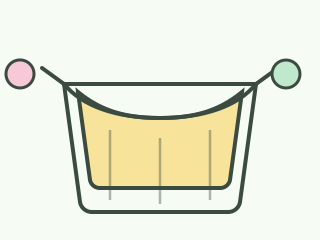
Cloth basket liners
Wicker has gaps and small things fall through them. A liner raises the floor a couple of inches, stops the load sliding sideways, and counts as an item once the basket is emptied.
View on Amazon
Cellophane basket bags
Worth it on a basket that travels or waits overnight, and the first line to cut on one carried from a closet to the kitchen table. Buy the size up; the gather at the top eats more than you think.
View on Amazon
Shipping boxes
A made basket travels as a parcel, not as a basket. Allow an inch of clearance on every side and fill it, and leave out anything fresh or meltable before the box is taped.
View on AmazonLiner, Bag, or Box: The Decision Rule for Wrapping an Easter Basket
One question settles it: where will this basket be next April? A basket you refill every year earns a liner. One you hand across the fence at the egg hunt gets a bag. One you mail gets a box.
| Wrap | Cost band (ours) | Time | After Easter | Best for (ours) |
|---|---|---|---|---|
| Cloth liner | $5–$15 in fabric | 30–45 minutes sewn | Becomes a bin liner; the basket becomes a keeper | Baskets you refill yearly |
| Cellophane bag | $1–$3 apiece | About 5 minutes | Torn off and binned | Same-day hand-offs |
| Shipping box | Free (reuse) to a few dollars | 15–20 minutes packed | Recycled, or saved for next year's mailing | Long-distance baskets |
Cost and time bands are our editorial judgment, not sourced figures. The reuse column is our opinion too: the liner is the only wrap that keeps working after the candy is gone. Containers and packaging are a big enough waste stream that the EPA tracks them as their own category in its materials data. A sewn liner is the one wrap that stays out of it.
Three listing traps, all checkable before you buy. Liner listings usually give flat fabric dimensions, not finished fit, so compare them to your basket's rim diameter and inside height. Bags run slack by design, and the gather at the top eats more than you think, so buy the size up. Boxes list exterior dimensions, and a packed basket needs about an inch of clearance on every side.
Our take: Our call is to sew the liner if there is any chance the basket comes back next year, and to treat bags as a consumable bought in a multipack. The box is the honest exception: when a basket is a long-distance gift, the box is the wrap, and the liner inside is what the family keeps. We would not bag anything that travels; bags catch and tear in transit.
Measure, Cut, and Tie: A Fabric Liner for Any Basket
The liner solves the problem wicker pretends not to have: gaps. Small things fall through, the load slides sideways, and the candy sits at an angle. A liner raises the floor a couple of inches, steadies everything, and counts as an item in its own right once the basket is emptied.
Supplies: half a yard of washable cotton, scissors, a tape measure, pins, half-inch elastic or ribbon, and a sewing machine or fabric glue.
- Measure the basket three ways: across the rim for diameter, around the rim for circumference, and from the inside floor to the rim for height.
- Add a half-inch seam allowance to every measurement before cutting. Skipping this is why homemade liners droop below the rim.
- Cut a bottom circle at the diameter plus allowance, and one side panel as long as the circumference plus allowance and two inches taller than the basket. That formula is the pattern; it fits any round basket.
- Sew the side panel into a ring, right sides together, then stitch the circle to the bottom edge.
- Fold the top edge over, stitch it into a channel, and thread the elastic or ribbon through.
- Set the liner in and tie the ribbon ends around the handle stems, or pull the elastic snug just under the rim.
A no-sew version, glued at the same seams, holds up fine for a liner that lives in one basket.
When to Skip the Wrapping (and What to Do Instead)
No cellophane? Skip it entirely. A liner plus a tall collar of filler, meaning tissue paper, crinkle paper, or paper shred, reads as finished. The filler does the work the bag only pretends to: it packs the bottom and the empty gaps so the contents stand up.
No handle means no gather-and-tie. Tuck the bag's edges down inside the rim instead, or put the basket in a box and tie the box. Shrink wrap looks tauter than a bag, but it wants a heat source; for one basket, the bag wins on time.
A basket that travels skips the bag altogether, because bags catch and tear in transit. Box it: an inch of clearance on every side, filler packed tight so nothing shifts, and nothing fresh or meltable left in before the tape. Check the calendar early, too, since Easter moves and the date sets your shipping runway (When Is Easter? Dates Through 2032 and Why It Moves).
One thing no wrap changes: the contents. If the recipient is under three, the U.S. Consumer Product Safety Commission bans toys with small parts for that age group under 16 CFR Part 1501, however the basket is dressed.
The agency's test cylinder approximates the fully expanded throat of a child under three, and anything that fits entirely inside counts as a small part that must carry a choking-hazard warning label. Check that label on everything before it disappears into the filler.
Wrapping Questions, Answered
How do you wrap an Easter basket with a clear gift bag, step by step?
Stand the bag upright and tape the bottom corners flat so the base squares off. Lower the filled basket in, gather the bag above the tallest item, and cinch it with ribbon or a twist tie. Leave two or three inches of bag above that item, or the gather has nothing to hold.
How much fabric do I need for a basket liner?
Half a yard of 45-inch fabric covers most medium baskets, seam allowance included. If the basket measures more than about 12 inches across, buy two-thirds of a yard so the side panel cuts in one piece. Wash and dry the fabric first, because a liner that shrinks later sits below the rim.
What size cellophane basket bag should I buy?
Add the basket's height to half its widest measurement, then add a few inches for the gather and tie. When you land between two sizes, take the larger. Bags cut from a roll need taping at the base; preformed bags skip that step and usually cost a little more per piece.
Jenny Albright and the editorial team behind this site compile buying guides from public sources, manufacturer specs, and customer reviews; nothing here was hands-on tested.
Sources
- U.S. Consumer Product Safety Commission — "Small Parts Ban and Choking Hazard Labeling" (https://www.cpsc.gov/Business--Manufacturing/Business-Education/Business-Guidance/Small-Parts-for-Toys-and-Childrens-Products) "Retrieved 2026-09-04".
- U.S. Environmental Protection Agency — "Containers and Packaging: Product-Specific Data" (https://www.epa.gov/facts-and-figures-about-materials-waste-and-recycling/containers-and-packaging-product-specific) "Retrieved 2026-09-04".